
Walk into almost any diagnostic lab during a busy outbreak season and you’ll hear the same question from patients and referring physicians alike: should this be a PCR test or a rapid test? It’s a fair question, and the honest answer is that both tests have a real, distinct role – they’re not competing versions of the same thing, they’re built to answer different questions at different speeds.
This guide breaks down what each test actually measures, where each one is the right tool, and where relying on the wrong one can lead to a misleading result.
Why This Comparison Comes Up So Often in Diagnostic Labs
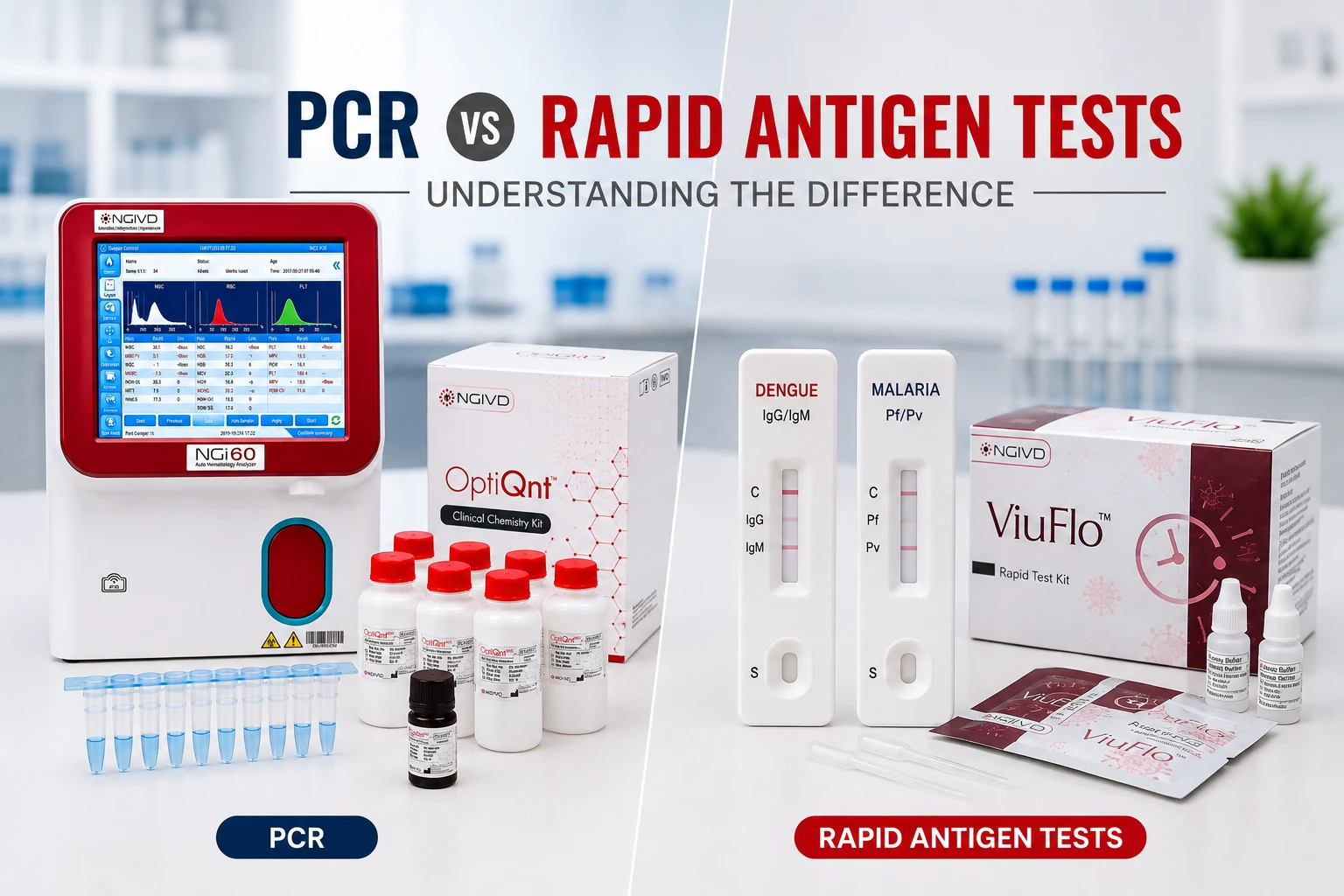
PCR and rapid antigen tests are often positioned as if a lab has to choose one over the other, but the more useful framing is that they solve different problems. PCR answers “is the pathogen’s genetic material present, even in tiny amounts?” A rapid antigen test answers “is there enough of the pathogen’s protein present right now to detect within minutes?” Understanding that distinction is the key to using each test appropriately – and to explaining results confidently to patients and physicians.
What a PCR Test Actually Detects
1. How PCR Works
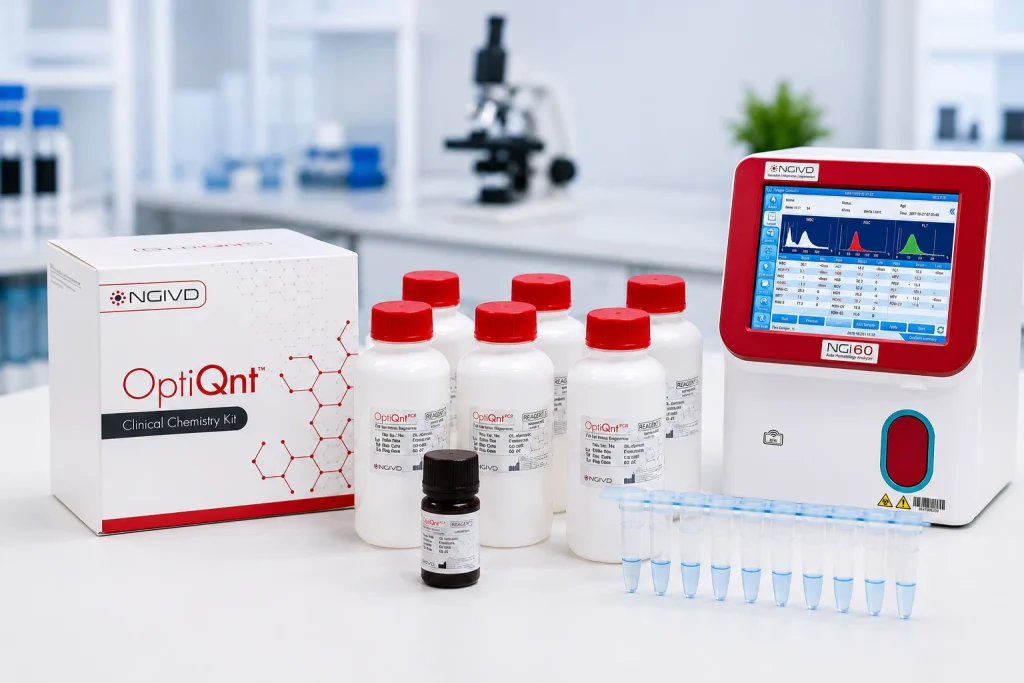
Polymerase Chain Reaction (PCR) – or RT-PCR when testing for RNA viruses – detects a pathogen’s genetic material by amplifying a specific target sequence millions of times over repeated heating and cooling cycles until it becomes detectable. Because the technique amplifies the target so extensively, PCR can pick up even very small amounts of viral or bacterial genetic material in a sample, which is what gives it such high sensitivity.
2. Why PCR Is Considered the Gold Standard
PCR’s ability to detect trace amounts of genetic material means it can identify infection earlier in the disease course, and in patients with lower pathogen loads, than an antigen test typically can. This is why PCR is generally treated as the reference or “gold standard” method against which other test types are validated, and why a negative PCR result carries strong diagnostic weight.
The trade-off is that PCR requires specialized equipment, trained technicians, and controlled laboratory conditions – it isn’t something that happens at the point of care in the way an antigen test does.
What a Rapid Antigen Test Actually Detects
1. How Rapid Antigen Tests Work
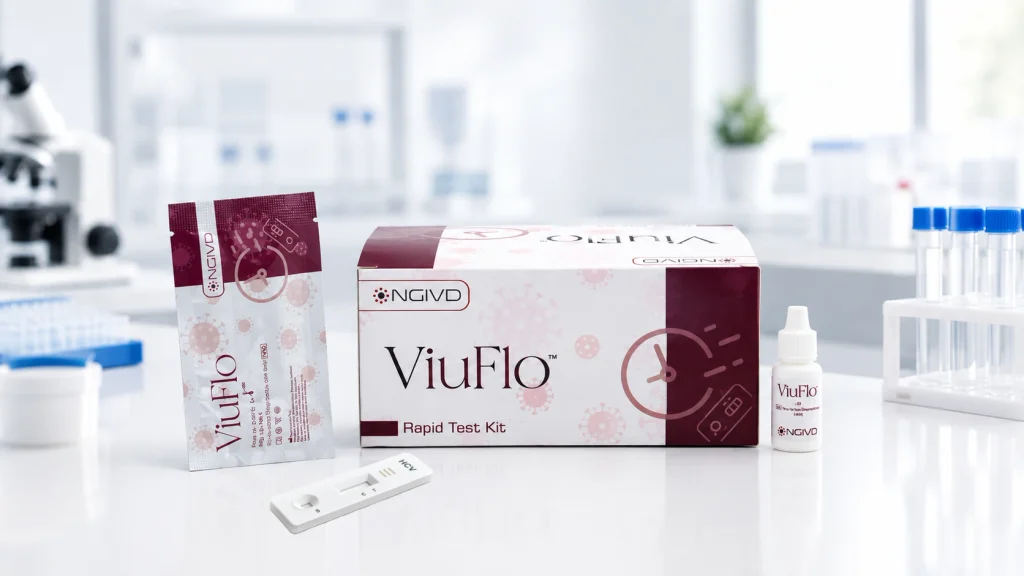
Rapid antigen tests detect specific proteins on the surface of a pathogen directly, using antibody-based lateral flow technology, similar in principle to a home pregnancy test. A sample is applied to the cassette, and if enough target protein is present, it binds to antibodies on the strip and produces a visible line, typically within 15 to 30 minutes.
2. Where Rapid Antigen Tests Fall Short
Because antigen tests need a certain concentration of viral protein to produce a visible result, they’re generally less sensitive than PCR, particularly in patients with a low pathogen load – early in infection before viral shedding peaks, later in infection as viral load declines, or in asymptomatic individuals. A negative rapid antigen test in a symptomatic patient with a strong clinical suspicion often warrants either a repeat test after 24–48 hours or confirmatory PCR, rather than being taken as a definitive negative.
3. Sensitivity and Specificity: The Core Trade-off
Sensitivity refers to a test’s ability to correctly identify people who do have the infection; specificity refers to its ability to correctly identify people who don’t. In practical terms:
- PCR offers high sensitivity and high specificity, making both false negatives and false positives relatively uncommon – but at the cost of speed and infrastructure.
- Rapid antigen tests offer high specificity (a positive result is usually reliably positive) but comparatively lower sensitivity, meaning false negatives are more likely, especially in low-viral-load samples.
This is the single most important trade-off to communicate to patients: a positive rapid antigen result can generally be trusted, while a negative one carries more uncertainty than a negative PCR result.
4. Turnaround Time and Infrastructure Requirements
PCR testing typically takes several hours from sample receipt to result, once you account for RNA/DNA extraction, amplification cycling, and analysis – and requires a molecular lab with appropriate biosafety controls, thermal cyclers, and trained personnel. Rapid antigen tests deliver a result in minutes, require no specialized equipment, and can be run at the point of care – a clinic, a camp, even a patient’s bedside – by staff with comparatively less specialized training.
5. Cost Considerations
Rapid antigen tests are generally the lower-cost option per test, both in consumable price and in the infrastructure investment required to run them, which is part of why they’re well suited to high-volume screening scenarios. PCR carries a higher per-test cost once equipment, reagents, and technician time are factored in, but that cost buys meaningfully higher diagnostic confidence – a trade-off that makes sense when the clinical stakes of a missed diagnosis are high.
When to Use PCR vs When to Use a Rapid Antigen Test
PCR is generally the better choice when:
- Confirmatory diagnosis is needed, especially before a major clinical decision
- The patient is asymptomatic or has a low anticipated viral load
- A rapid antigen test has returned a negative result but clinical suspicion remains high
- Regulatory, occupational, or travel requirements specifically call for molecular confirmation
A rapid antigen test is generally the better choice when:
- A fast result is needed to guide immediate triage or isolation decisions
- Mass screening is required and lab infrastructure or turnaround time is a constraint
- The patient is symptomatic and likely has a higher viral load, when antigen tests perform closest to PCR-level sensitivity
- Point-of-care testing is needed outside a lab setting – a clinic, a camp, or a remote facility
Can They Be Used Together?
Yes, and in many outbreak and screening protocols, they’re designed to complement each other rather than substitute for one another. A common approach is to use rapid antigen testing as a fast first-line screen, reserving PCR for confirming negative results in symptomatic high-suspicion patients, or for cases where the antigen result doesn’t match the clinical picture. This combined approach balances speed and cost against diagnostic certainty far better than either test used alone.
Quick Comparison Table
| Factor | PCR | Rapid Antigen Test |
| What it detects | Genetic material (RNA/DNA) | Surface proteins |
| Sensitivity | High | Moderate, viral-load dependent |
| Specificity | High | High |
| Turnaround time | Several hours | 15–30 minutes |
| Infrastructure needed | Molecular lab, thermal cycler | Minimal, point-of-care |
| Typical cost per test | Higher | Lower |
| Best used for | Confirmatory diagnosis, low viral load cases | Fast triage, high-volume screening |
Why This Matters for Labs Working With NGIVD
NGIVD supports both sides of this comparison – the isoPwr, RubAce and MolFeri range for molecular diagnostics workflows, and the ViuFlo range for rapid antigen and rapid diagnostic testing – all manufactured at the company’s ISO 9001:2015, ISO 14001:2015, ISO 13485:2016 and cGMP-certified facility in IMT Manesar, Haryana. For labs building out a testing protocol that uses both methods appropriately, explore the Molecular Diagnostics range and Rapid Test Kits range, or get in touch with the NGIVD team to discuss which fits your lab’s testing protocol.
Frequently Asked Questions (FAQs)
1. Is PCR more accurate than a rapid antigen test?
PCR generally offers higher sensitivity, meaning it can detect infection at lower pathogen concentrations than a rapid antigen test can. Both methods offer high specificity, so a positive result on either test is generally reliable, but a negative rapid antigen result carries more uncertainty than a negative PCR result.
2. Why would a rapid antigen test show negative when PCR shows positive?
This usually happens when the pathogen concentration in the sample is below the antigen test’s detection threshold – common very early or late in infection, or in patients with a naturally lower viral load. PCR’s amplification process allows it to detect genetic material at concentrations far below what an antigen test can pick up.
3. How long does it take to get a PCR result compared to a rapid antigen test?
Rapid antigen tests typically deliver a result within 15 to 30 minutes. PCR testing generally takes several hours from sample receipt to final result, once extraction, amplification, and analysis time are accounted for.
4. Can a rapid antigen test be used instead of PCR for confirmatory diagnosis?
It depends on the clinical context. For fast triage and high-volume screening, rapid antigen testing is well suited. For confirmatory diagnosis, especially in asymptomatic patients, low-viral-load cases, or when clinical suspicion remains despite a negative antigen result, PCR remains the more reliable confirmatory method.
5. Do PCR and rapid antigen tests require different sample types?
Both commonly use nasopharyngeal or oropharyngeal swabs for respiratory pathogens, though the sample handling differs significantly – PCR samples typically go into a viral transport medium for lab processing, while antigen test samples are applied directly to the test cassette at the point of care.
6. Is it worth running both tests on the same patient?
In specific scenarios, yes – particularly when a rapid antigen test is negative but clinical suspicion is high, or when a fast initial screen is needed before a slower PCR confirmation comes back. Many outbreak testing protocols are built around this combined approach rather than relying on a single test type alone.