

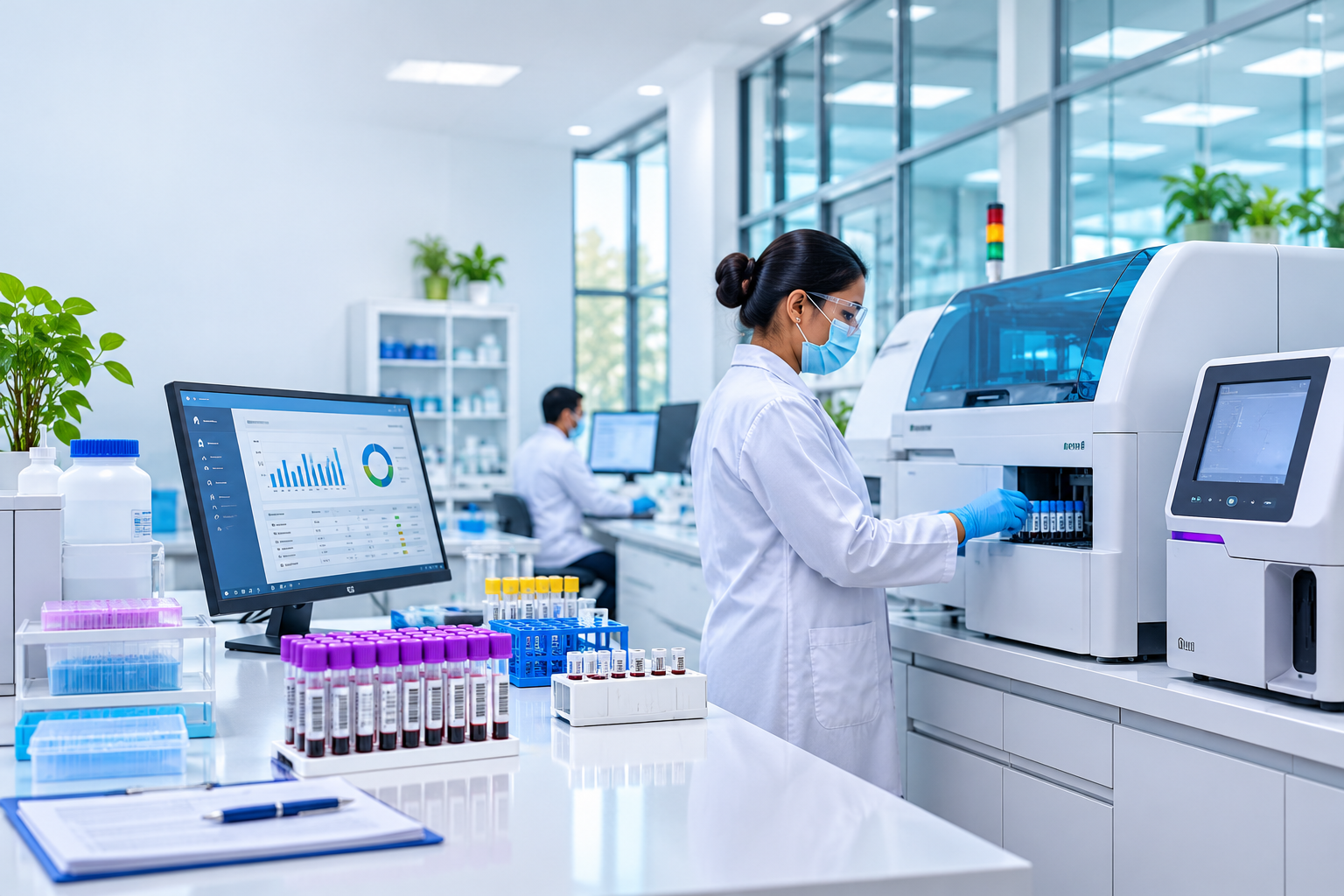
Diagnostic laboratories play an essential role in modern healthcare. From routine blood investigations and clinical chemistry testing to molecular diagnostics and infectious disease screening, laboratory results help healthcare professionals make informed decisions about patient care.
As the demand for diagnostic services increases, laboratories face growing pressure to deliver accurate results within shorter turnaround times while managing operational costs, staff workloads and quality requirements. However, improving laboratory efficiency does not simply mean processing more samples in less time. It means creating a well-organised system in which people, processes, equipment and technology work together effectively without compromising testing quality.
A laboratory with an efficient workflow can reduce avoidable delays, minimize errors, improve resource utilization and deliver a better experience to healthcare providers and patients. So, how can diagnostic laboratories improve their overall performance?
Here are 10 practical strategies that can help laboratories improve efficiency, streamline daily operations and build a more productive diagnostic environment.
What Is Diagnostic Laboratory Efficiency?
Diagnostic laboratory efficiency refers to the ability of a laboratory to perform its operations effectively while making the best use of available resources, including staff, equipment, reagents, infrastructure and time. It involves managing the complete testing process, from receiving a test request and collecting a sample to analysing it, validating the result and delivering the final report.
An efficient diagnostic laboratory aims to achieve:
- Faster and more consistent turnaround times.
- Accurate and reliable test results.
- Smooth sample collection and processing.
- Effective utilisation of instruments and laboratory staff.
- Better inventory and reagent management.
- Reduced repeat testing and avoidable wastage.
- Consistent quality control and documentation.
- Improved communication with doctors, patients and healthcare facilities.
Efficiency should always go hand in hand with quality. Faster reporting is valuable only when the results remain reliable and the laboratory follows appropriate quality and safety practices.
10 Practical Ways to Improve Diagnostic Laboratory Efficiency
1. Optimise the Laboratory Workflow
One of the first steps towards improving laboratory efficiency is understanding how work moves through the facility. Every diagnostic test follows a series of activities, commonly divided into three phases:
- Pre-analytical phase: Includes test requests, patient identification, sample collection, labelling, transportation and sample preparation.
- Analytical phase: Covers the actual testing process, including instrument operation, reagent handling, calibration and quality control.
- Post-analytical phase: Includes result validation, report generation, communication and delivery of reports.
Delays or errors at any of these stages can affect the overall turnaround time. For example, a sample may reach the laboratory quickly but remain unprocessed because of incomplete documentation or an inefficient sample-reception process. Similarly, testing may be completed on time, but delays in result validation or report delivery can affect the final turnaround time. Laboratories should regularly review each stage and identify unnecessary steps, repeated activities and process bottlenecks.
Practical steps:
- Map the complete sample journey from collection to reporting.
- Standardise sample-receiving and processing procedures.
- Establish clear responsibilities for each team member.
- Identify frequently delayed activities.
- Organise workstations to minimise unnecessary movement.
- Review workflow performance regularly.
A well-designed workflow reduces confusion, saves time and helps laboratory teams work more systematically.
2. Invest in Appropriate Laboratory Automation
Manual processes can consume significant staff time, particularly in laboratories handling high sample volumes. Laboratory automation can help simplify repetitive activities, reduce manual handling and improve consistency. Depending on the laboratory’s requirements, automation may be introduced through:
- Automated biochemistry analysers.
- Automated haematology analysers.
- Automated nucleic acid extraction systems.
- Barcode-based sample identification.
- Laboratory Information Management Systems (LIMS).
- Automated report generation and result transfer.
For example, a fully automated biochemistry analyser can process multiple samples with less manual intervention than a semi-automated system, depending on the instrument’s specifications and the laboratory workflow. Similarly, barcode-based sample identification can help reduce manual data-entry errors and improve sample traceability.
However, automation should be selected according to actual testing demand, budget, infrastructure and staff capabilities. A laboratory does not necessarily need the most advanced instrument available; it needs equipment that fits its operational requirements.
Practical steps:
- Evaluate daily and peak-hour sample volumes.
- Identify repetitive tasks suitable for automation.
- Compare semi-automated and fully automated equipment.
- Assess compatibility with existing laboratory systems.
- Consider maintenance, consumables and operating costs.
- Train staff before introducing new equipment.
The right automation strategy can help laboratories improve productivity while allowing trained personnel to focus on quality and result verification.
3. Select the Right Diagnostic Equipment
Laboratory equipment has a direct impact on testing capacity, workflow and operational performance. Choosing an instrument only because of its purchase price or advertised speed may not deliver the best long-term value. Laboratories should consider their test menu, average daily workload, peak testing requirements and future growth before selecting diagnostic equipment. For example, a small diagnostic laboratory may find a semi-automated biochemistry analyser suitable for its current workload. A high-volume laboratory may benefit from a fully automated system with greater sample-processing capacity.
Important factors to consider include:
- Testing throughput and processing speed.
- Available test parameters and applications.
- Sample and reagent requirements.
- Ease of operation.
- Calibration and quality control requirements.
- Maintenance and service support.
- Availability of reagents and consumables.
- Total cost of ownership.
Equipment should also be reviewed periodically to identify underutilised instruments, recurring downtime and opportunities for better capacity planning. Selecting the right equipment helps laboratories balance testing demand, operational cost and service quality.
4. Strengthen Quality Control and Standard Operating Procedures
Efficiency should never come at the expense of diagnostic quality. Inconsistent testing procedures, inadequate quality checks and poor documentation can lead to errors, repeat investigations and delays. A strong quality management system helps ensure that laboratory activities are performed consistently and that potential problems are identified before they affect reporting.
Quality control should be integrated into routine laboratory operations rather than treated as an occasional activity.
Important practices include:
- Following documented Standard Operating Procedures (SOPs).
- Performing internal quality control according to the applicable test and instrument requirements.
- Participating in external quality assessment or proficiency testing where appropriate.
- Monitoring calibration and instrument performance.
- Recording and reviewing quality control results.
- Investigating deviations and implementing corrective actions.
- Maintaining equipment and reagent records.
For example, if a quality control result falls outside the laboratory’s defined acceptance limits, the issue should be investigated and resolved before affected patient results are released, following the laboratory’s approved procedures. Clear SOPs also help new employees understand their responsibilities and reduce variations between operators. A consistent quality system improves confidence in laboratory results and reduces the operational burden associated with preventable errors.
5. Improve Reagent and Inventory Management
Poor inventory planning can interrupt testing operations. Running out of essential reagents, calibrators, controls or consumables can delay sample processing and affect the laboratory’s ability to deliver reports on time. On the other hand, excessive stock can increase storage costs and the risk of expiry or wastage. An effective inventory management system helps laboratories maintain the right balance.
Practical inventory management strategies:
- Maintain a centralised record of reagents and consumables.
- Monitor stock levels regularly.
- Establish minimum and maximum stock limits.
- Track batch numbers and expiry dates.
- Follow the manufacturer’s recommended storage conditions.
- Use a First-Expiry-First-Out (FEFO) approach.
- Plan purchases based on historical consumption and expected demand.
- Maintain reliable supplier relationships.
Laboratories should also consider reagent compatibility when selecting clinical chemistry systems and other diagnostic equipment. For instance, using suitable liquid-stable, ready-to-use reagents can simplify preparation and reduce certain manual handling steps, depending on the assay and analyser. Better inventory planning helps prevent stock shortages, reduce wastage and maintain continuity of laboratory operations.
6. Reduce Sample Processing Delays and Improve Turnaround Time
Turnaround time (TAT) is an important performance indicator for diagnostic laboratories. It generally measures the time taken to complete a testing process, from a defined starting point to the release of the result.
Long turnaround times may result from several operational challenges, including:
- Delays in sample collection or transportation.
- Incomplete patient or test information.
- Incorrect sample labelling.
- Delayed sample registration.
- Inefficient sample sorting.
- Instrument downtime.
- Reagent shortages.
- Delays in result validation.
- Manual report preparation.
To improve TAT, laboratories should identify where delays occur rather than focusing only on the speed of the analyser.
Practical steps:
- Establish clear sample acceptance and rejection criteria.
- Introduce barcode-based sample tracking where appropriate.
- Prioritise urgent samples through a defined procedure.
- Organise samples according to test requirements.
- Monitor instrument availability and downtime.
- Set realistic turnaround time targets for different test categories.
- Review delayed reports and identify recurring causes.
Laboratories should measure TAT consistently and compare performance across different shifts, test categories and workload periods. Reducing unnecessary waiting time across the entire testing process can improve service delivery without compromising quality.
7. Train and Empower Laboratory Staff
Technology and equipment alone cannot make a laboratory efficient. Skilled and well-trained personnel remain essential to smooth operations. Laboratory staff are responsible for sample handling, equipment operation, reagent preparation, quality control, result verification and documentation. A lack of training or unclear responsibilities can lead to inconsistent procedures, operational delays and avoidable errors. Regular training helps employees stay familiar with current testing methods, equipment requirements and quality practices.
Areas where staff training is important:
- Sample collection and handling.
- Operation of diagnostic instruments.
- Reagent preparation and storage.
- Quality control and calibration.
- Biosafety and contamination prevention.
- Documentation and reporting procedures.
- Equipment troubleshooting.
- Laboratory information systems.
Laboratory managers should also encourage communication between different teams so that issues can be identified and resolved quickly. A well-trained team can make better use of available resources, respond to operational challenges and maintain consistent laboratory performance.
8. Adopt Digital Tools for Better Laboratory Management
Digitalisation can help laboratories improve information flow, reduce paperwork and manage daily activities more efficiently. Traditional manual systems often involve repeated data entry, paper-based records and separate reporting processes. These activities can consume time and create opportunities for transcription errors.
Laboratory Information Management Systems (LIMS) and Laboratory Information Systems (LIS) can help streamline several operations.
Depending on the system and its integration capabilities, digital tools may support:
- Patient and sample registration.
- Barcode generation and sample tracking.
- Test allocation and processing status.
- Instrument interfacing.
- Result management and validation.
- Report generation and delivery.
- Inventory monitoring.
- Performance tracking and data analysis.
Digital systems can also help laboratory managers monitor workload, identify recurring delays and make better operational decisions. However, successful digitalisation requires appropriate software selection, staff training, data security measures and reliable infrastructure. The objective should be to simplify work and improve traceability, not introduce additional complexity.
9. Maintain Equipment and Prevent Unplanned Downtime
Instrument downtime can disrupt testing schedules, increase backlogs and delay reports. Waiting until equipment stops working completely can be costly for a diagnostic laboratory. Preventive maintenance helps reduce the risk of unexpected breakdowns and supports consistent equipment performance.
Important maintenance practices include:
- Following manufacturer-recommended maintenance schedules.
- Performing routine cleaning and inspection.
- Monitoring instrument performance.
- Maintaining calibration and service records.
- Replacing components when required.
- Checking electrical and environmental requirements.
- Keeping essential spare parts and consumables available where appropriate.
- Contacting authorised technical support when necessary.
Laboratories should also maintain a clear process for handling equipment failures, including alternative testing arrangements where available. Regular maintenance supports equipment reliability, reduces avoidable interruptions and helps extend instrument service life.
10. Monitor Performance Through Key Performance Indicators
Improving laboratory efficiency is an ongoing process. Without measurement, it becomes difficult to identify whether operational changes are delivering the expected results. Laboratories should establish measurable Key Performance Indicators (KPIs) to monitor performance and identify areas requiring improvement.
Some useful laboratory efficiency indicators include:
| KPI | What It Measures |
|---|---|
| Turnaround Time (TAT) | Time taken from a defined starting point to result release |
| Sample Rejection Rate | Percentage of samples rejected due to quality or identification issues |
| Repeat Testing Rate | Frequency of tests that need to be repeated |
| Instrument Downtime | Time equipment remains unavailable for testing |
| Test Volume | Number of tests processed over a defined period |
| Reagent Wastage | Loss of reagents due to expiry, spillage or improper handling |
| Quality Control Performance | Compliance with defined quality control requirements |
| Report Correction Rate | Frequency of corrected or amended reports |
| Staff Productivity | Workload handled in relation to available staff and working time |
The purpose of KPIs is not simply to compare numbers. It is to understand why certain problems occur and determine how processes can be improved. For example, a high sample rejection rate may indicate problems with collection instructions, labelling or transportation. Frequent instrument downtime may suggest maintenance or equipment utilisation issues. Regular performance reviews help laboratories make decisions based on actual operational data.
How to Identify and Eliminate Laboratory Workflow Bottlenecks
Even laboratories with modern equipment and trained staff can experience operational inefficiencies. A useful way to identify these issues is to examine the complete workflow and understand where time, effort or resources are being wasted.
Common examples include:
1. Repeated manual data entry: Introduce appropriate digital systems and barcode-based identification to reduce unnecessary duplication.
2. Poor workstation organisation: Arrange equipment, consumables and work areas according to the sequence of laboratory activities.
3. Delayed sample registration: Standardise sample-receiving procedures and use suitable tracking systems.
4. Frequent reagent shortages: Maintain stock records, monitor consumption and plan purchases in advance.
5. Underutilised equipment: Review workload distribution and select equipment according to actual testing demand.
6. Unclear staff responsibilities: Establish defined roles, escalation procedures and documented workflows.
7. Delayed report verification: Standardise result review procedures and ensure adequate staffing for reporting activities.
Lean management principles can also help laboratories identify activities that do not add value and redesign processes to improve the overall flow of work. Small, well-planned improvements implemented consistently can make a meaningful difference to daily laboratory operations.
The Role of Diagnostic Equipment and Reagents in Laboratory Efficiency
Diagnostic equipment and reagents are two of the most important operational components of a clinical laboratory. The right combination can help laboratories manage testing workloads, maintain consistent procedures and reduce avoidable interruptions.
For example:
- Biochemistry analysers support routine biochemical investigations and help laboratories process clinical chemistry samples according to instrument capacity.
- Haematology analysers support automated blood cell analysis and can help reduce manual workload in routine complete blood count testing.
- Clinical chemistry reagents are essential for performing biochemical tests and should be selected based on assay requirements, analyser compatibility and quality considerations.
- Rapid diagnostic test kits can support timely testing in suitable clinical and point-of-care settings.
- Molecular diagnostic solutions support specialised workflows involving nucleic acid extraction, PCR and other molecular applications.
When selecting equipment and consumables, laboratories should evaluate not only purchase price but also reagent availability, service support, maintenance requirements, operating costs and compatibility. A reliable supplier relationship is equally important for maintaining continuity of laboratory operations.
How NGIVD Supports Diagnostic Laboratories
At NGIVD, the focus is on developing and manufacturing in-vitro diagnostic products, reagents and clinical diagnostic solutions that support the evolving requirements of diagnostic laboratories and healthcare institutions. The company’s portfolio covers multiple diagnostic segments, including clinical chemistry, haematology, rapid testing, molecular diagnostics and point-of-care testing. Through its product range, NGIVD aims to support laboratories with solutions across different stages of diagnostic testing.
Its portfolio includes:
- Molecular Biology Solutions: Products supporting molecular laboratory workflows and contamination control.
- OptiQnt Clinical Chemistry Kits: Liquid-stable clinical chemistry reagents for routine biochemical testing applications.
- ViuFlo Rapid Test Kits: Rapid diagnostic solutions for selected infectious disease testing applications.
- isoPwr-S and isoPwr-M: Nucleic acid purification solutions based on silica spin column and magnetic bead technologies, respectively.
- NGIVD Analysers: Diagnostic instrument solutions for laboratory testing requirements.
NGIVD combines research, product development and manufacturing capabilities with a focus on quality, accessibility and continuous improvement. Its philosophy, “Bridging Science for Better Health,” reflects the belief that diagnostic innovation should translate into practical solutions for laboratories and healthcare providers.
For diagnostic laboratories, choosing suitable equipment, compatible reagents and dependable supply partners is an important part of building a consistent and efficient testing workflow.
Conclusion: Building a More Efficient Diagnostic Laboratory
Improving diagnostic laboratory efficiency is not a one-time activity. It requires continuous evaluation of workflows, equipment, inventory, quality systems and staff performance. From optimizing sample processing and introducing appropriate automation to strengthening quality control, training employees and monitoring performance indicators, every improvement contributes to a more organized laboratory environment.
However, efficiency should never be measured by speed alone. The real objective is to deliver accurate, reliable and timely diagnostic results while making effective use of available resources. As diagnostic technology continues to evolve, laboratories that focus on continuous improvement, quality-driven processes and appropriate technology adoption will be better prepared to meet changing healthcare requirements.
A more efficient laboratory is not simply one that performs more tests. It is one that delivers reliable results, uses resources wisely and maintains quality at every stage of the testing process.
Frequently Asked Question (FAQ)
Q1. How can diagnostic laboratories improve efficiency?
Diagnostic laboratories can improve efficiency by optimising workflows, introducing appropriate automation, maintaining equipment, managing inventory, training staff and monitoring turnaround times.
Q2. What is laboratory turnaround time (TAT)?
Laboratory turnaround time is the time taken to complete a defined part of the testing process, such as from sample receipt to result reporting. Laboratories should clearly define the start and end points when measuring TAT.
Q3. How does automation improve laboratory efficiency?
Automation can reduce repetitive manual tasks, improve workflow consistency, support sample traceability and help laboratories manage higher testing volumes, depending on the equipment and application.
Q4. Why is quality control important in diagnostic laboratories?
Quality control helps laboratories monitor testing performance, identify potential problems and maintain confidence in the reliability of diagnostic results.
Q5. How can laboratories reduce reagent wastage?
Laboratories can reduce reagent wastage through accurate stock monitoring, expiry-date tracking, appropriate storage, consumption forecasting and effective supplier planning.
Q6. What are the important KPIs for diagnostic laboratories?
Important KPIs include turnaround time, sample rejection rate, repeat testing rate, instrument downtime, reagent wastage, quality control performance and report correction rate.