
Molecular diagnostics has transformed the way diseases are detected, investigated and monitored. Techniques such as Polymerase Chain Reaction (PCR), Real-Time PCR (qPCR), Reverse Transcription PCR (RT-PCR) and genetic sequencing allow laboratories to identify specific genetic material with high analytical sensitivity. However, before these techniques can detect a target sequence, the genetic material must first be obtained from the biological sample.
This is where nucleic acid extraction becomes essential. Nucleic acid extraction is a fundamental step in molecular biology and molecular diagnostics. It involves isolating and purifying DNA or RNA from biological samples while removing unwanted substances that may interfere with subsequent testing.
The quality of this extraction process can directly influence the performance of downstream molecular applications. Even sophisticated testing instruments and advanced detection methods depend on suitable sample preparation and good-quality nucleic acids. In this article, we explore what nucleic acid extraction is, how it works, the commonly used extraction methods, its applications and the factors laboratories should consider when selecting an extraction solution.
What Is Nucleic Acid Extraction?
Nucleic acid extraction is the process of separating DNA (Deoxyribonucleic Acid) or RNA (Ribonucleic Acid) from other components present in a biological sample. DNA and RNA carry genetic information. Depending on the organism and the application, this genetic material may be present in human cells, bacteria, viruses, fungi, plants or other biological materials.
However, biological samples contain much more than genetic material. They may also contain proteins, lipids, cellular debris, salts, enzymes and other substances that can interfere with molecular testing. Nucleic acid extraction helps isolate the required genetic material and remove many of these unwanted components. The extracted DNA or RNA can then be used in different downstream applications, including:
- Polymerase Chain Reaction (PCR)
- Reverse Transcription PCR (RT-PCR)
- Real-Time PCR (qPCR)
- Next-Generation Sequencing (NGS)
- Genetic analysis and research
- Microbial identification
- Molecular detection of infectious agents
In simple terms, nucleic acid extraction prepares a biological sample so that its genetic material can be studied or detected using molecular techniques.
Why Is Nucleic Acid Extraction Important in Molecular Diagnostics?
Molecular diagnostic tests work by detecting specific genetic sequences associated with a target organism, disease or biological condition. For these tests to perform reliably, the sample must contain nucleic acids of suitable quality and quantity. Poor extraction can result in low recovery of genetic material, degradation of DNA or RNA, or the presence of substances that interfere with amplification and detection. This may affect the overall reliability of the molecular testing process.
Here are some important reasons why nucleic acid extraction matters:
1. Enables Accurate Molecular Detection
Extraction helps make the target genetic material accessible for downstream molecular analysis. Suitable sample preparation supports the detection of specific DNA or RNA sequences.
2. Removes Potential PCR Inhibitors
Biological samples may contain substances such as haemoglobin, heparin, proteins, salts and other compounds that can interfere with nucleic acid amplification. An effective purification process helps reduce these potential inhibitors.
3. Improves Nucleic Acid Purity
Removing unwanted cellular components and chemical residues helps produce purified DNA or RNA suitable for downstream applications.
4. Supports Reliable Test Performance
Consistent extraction procedures help reduce variations in sample preparation and support reproducible molecular testing workflows.
5. Enables Multiple Molecular Applications
Extracted nucleic acids can be used in PCR, RT-PCR, qPCR, sequencing and other molecular biology applications, depending on the quality and suitability of the preparation.
How Does the Nucleic Acid Extraction Process Work?
Although different extraction technologies use different principles, most conventional nucleic acid purification workflows involve a series of common steps.
These steps are designed to release genetic material from the sample, separate it from unwanted substances and recover purified DNA or RNA.
Step 1: Sample Collection and Preparation
The process begins with collecting an appropriate biological specimen. Depending on the intended application, samples may include:
- Whole blood
- Serum or plasma
- Nasopharyngeal and oropharyngeal swabs
- Saliva
- Urine
- Tissue samples
- Bacterial cultures
- Cell suspensions
- Other biological specimens
Proper sample collection, transportation and storage are important because the condition of the original specimen can influence nucleic acid recovery and integrity. The extraction method must be compatible with the sample type being processed.
Step 2: Cell Lysis
The next step is cell lysis, which involves breaking open cells or disrupting biological structures to release the genetic material. Lysis buffers and other chemical components help disrupt cell membranes and, where required, other protective structures.
For RNA extraction, it is particularly important to control RNase activity because RNases are enzymes that can degrade RNA. The objective of this step is to release the DNA or RNA while protecting it from degradation.
Step 3: Nucleic Acid Binding or Separation
Once the genetic material has been released, it must be separated from proteins, cellular debris and other sample components. The exact mechanism depends on the extraction technology. In silica-based methods, nucleic acids bind to a silica membrane under appropriate chemical conditions.
In magnetic bead-based methods, DNA or RNA binds to specially designed magnetic particles. Other extraction methods may use different chemical or physical separation principles.
Step 4: Washing and Purification
After the nucleic acids have been captured or separated, washing steps help remove unwanted substances.
These may include:
- Proteins and cellular debris
- Residual salts
- Lipids and other contaminants
- Unbound sample components
- Extraction reagents that may interfere with downstream reactions
Effective washing is important because residual contaminants can affect amplification efficiency and other molecular applications.
Step 5: Elution and Recovery
The final step in many purification workflows is elution. During elution, purified DNA or RNA is released from the silica membrane or magnetic beads into an appropriate low-salt buffer or nuclease-free water.
The recovered nucleic acid is then available for downstream applications such as PCR, RT-PCR, qPCR or sequencing. The final quality depends on several factors, including sample type, extraction chemistry, handling practices and the intended molecular application.
Common Methods of Nucleic Acid Extraction
Different extraction methods are available depending on the type of biological sample, laboratory requirements, processing volume and downstream application.
Two widely used solid-phase extraction technologies are silica spin column extraction and magnetic bead extraction. Other methods, including organic extraction and automated extraction systems, are also used in molecular biology laboratories.
1. Silica Spin Column-Based Extraction
Silica spin column extraction is a widely used method for isolating DNA and RNA from biological samples. It works on the principle that nucleic acids can bind to a silica membrane under suitable salt and chemical conditions.
The process generally involves:
- The sample is lysed to release nucleic acids.
- Binding conditions are established to allow DNA or RNA to attach to the silica membrane.
- The sample is passed through the spin column using centrifugation.
- Washing buffers remove unwanted contaminants.
- Purified nucleic acids are recovered through elution.
Advantages of silica spin column extraction:
- Straightforward and established workflow
- Effective purification of DNA and RNA
- Suitable for different sample types, depending on kit design
- Does not require specialised magnetic separation equipment
- Useful for routine molecular biology and diagnostic laboratory workflows
Limitations:
- Many protocols require centrifugation.
- Manual processing may involve multiple handling steps.
- Processing capacity may be limited when handling large numbers of samples.
- Recovery can vary depending on sample type and protocol conditions.
Spin column extraction is commonly considered for laboratories that require a practical and established approach to nucleic acid purification.
2. Magnetic Bead-Based Nucleic Acid Extraction
Magnetic bead-based extraction uses specially coated magnetic particles that bind nucleic acids under suitable chemical conditions. After binding, a magnetic field is applied to collect the beads, allowing the remaining liquid containing unwanted substances to be removed. The beads undergo washing steps before the purified DNA or RNA is released through elution.
Advantages of magnetic bead extraction:
- Does not require centrifugation during magnetic separation
- Suitable for manual as well as automated workflows
- Can support higher-throughput sample processing when used with appropriate equipment
- Offers flexibility across different sample types and molecular applications
- Supports consistent purification when protocols are properly optimised
Limitations:
- Requires suitable magnetic separation equipment or magnetic stands.
- Bead handling and washing conditions must be optimised.
- Residual beads or reagents may affect downstream reactions if purification is incomplete.
- Automation requires compatible instruments and validated workflows.
Magnetic bead extraction is particularly useful for laboratories seeking flexible processing options and potential workflow automation.
3. Organic Extraction Method
Organic extraction methods, such as phenol-chloroform-based procedures, use chemical separation to isolate nucleic acids from other cellular components. These methods can provide good nucleic acid recovery and are used in certain research applications. However, they involve hazardous chemicals, additional handling precautions and waste disposal requirements. For routine diagnostic laboratory workflows, commercial extraction kits may offer a more standardised and convenient alternative.
4. Automated Nucleic Acid Extraction
Automated extraction systems use specialised instruments to perform several extraction steps with reduced manual intervention. Depending on the platform, automated systems may use magnetic bead technology or other purification principles.
Potential benefits include:
- Reduced repetitive manual handling
- Improved workflow standardisation
- Higher sample processing capacity
- Reduced operator-to-operator variation
- Better integration into high-throughput molecular laboratories
The suitability of an automated system depends on sample volume, testing demand, available infrastructure and compatibility with the extraction chemistry.
Spin Column vs Magnetic Bead Extraction: What Is the Difference?
Both technologies are widely used for nucleic acid purification, but they differ in their separation principles and workflow requirements.
| Parameter | Spin Column Extraction | Magnetic Bead Extraction |
|---|---|---|
| Main technology | Silica membrane | Magnetic particles |
| Binding principle | Nucleic acid binding to silica | Nucleic acid binding to coated beads |
| Separation | Centrifugation or vacuum | Magnetic separation |
| Equipment | Centrifuge or suitable manifold | Magnetic stand or compatible instrument |
| Automation | Possible with compatible systems | Well suited to automation |
| Workflow | Column-based purification | Bead-based purification |
| Typical application | Routine DNA/RNA purification | Routine and potentially higher-throughput workflows |
Which method should a laboratory choose?
There is no single extraction method that is ideal for every laboratory. Spin column extraction may be suitable for laboratories that prefer a straightforward manual workflow and process a manageable number of samples. Magnetic bead extraction may be appropriate for laboratories that need flexible sample processing, reduced centrifugation steps or integration with automated systems. The decision should be based on sample compatibility, extraction performance, workflow requirements, available equipment and total operating cost.
Factors That Affect Nucleic Acid Extraction Quality
The success of molecular testing depends not only on the extraction technology but also on how the complete sample preparation process is managed.
Several factors can influence the quality of extracted DNA and RNA.
1. Sample Quality and Type
Different biological specimens contain different amounts of genetic material and potential contaminants. For example, blood, saliva, swab specimens and tissue samples may require different lysis and purification conditions. Selecting a method designed for the intended specimen type is essential.
2. Nucleic Acid Integrity
DNA and RNA can degrade during collection, transportation, storage or processing. RNA is particularly sensitive to degradation by RNases. Appropriate sample handling, suitable stabilisation and controlled processing conditions help preserve nucleic acid integrity.
3. Extraction Efficiency and Yield
Extraction yield refers to the amount of nucleic acid recovered from a sample. An effective extraction process should recover sufficient genetic material for the intended downstream application. However, a high yield alone does not guarantee good extraction quality. Purity and integrity must also be considered.
4. Purity of Extracted Nucleic Acids
Purity indicates the extent to which the extracted nucleic acid is free from unwanted contaminants. UV spectrophotometry can provide useful information through absorbance ratios such as A260/A280 and A260/A230. For relatively pure DNA, an A260/A280 ratio around 1.8 is commonly expected, while relatively pure RNA often shows a ratio around 2.0. These are indicative values rather than universal acceptance criteria. Interpretation depends on sample concentration, measurement conditions and the downstream application.
5. Removal of PCR Inhibitors
Certain substances present in biological specimens or introduced during extraction can interfere with PCR amplification. Effective purification helps minimise the carryover of these inhibitors and supports suitable downstream assay performance.
6. Proper Storage and Handling
Extracted nucleic acids should be stored under conditions appropriate for the specific material and intended application. Repeated freeze-thaw cycles, unsuitable temperatures and contamination can compromise sample quality. Laboratories should follow the extraction kit manufacturer’s instructions for storage and handling.
Applications of Nucleic Acid Extraction in Molecular Diagnostics
Nucleic acid extraction is used across a wide range of molecular biology and diagnostic applications.
1. Infectious Disease Testing
Molecular diagnostic methods can detect genetic material from viruses, bacteria and other microorganisms. Extracted viral RNA or microbial DNA may be used in PCR and RT-PCR workflows to identify specific infectious agents.
2. PCR and Real-Time PCR
PCR amplifies selected DNA sequences, while qPCR monitors amplification in real time. For RNA targets, reverse transcription is generally required to produce complementary DNA (cDNA) before PCR amplification. Suitable nucleic acid extraction helps prepare samples for these applications.
3. Genetic Research and Analysis
Purified DNA and RNA are essential for various molecular biology research activities, including gene expression studies, genetic analysis and molecular characterisation.
4. Next-Generation Sequencing
Next-Generation Sequencing (NGS) enables the analysis of genetic material across large numbers of DNA or RNA sequences. The quality of the starting nucleic acid can influence library preparation and sequencing outcomes.
5. Microbial Identification
DNA and RNA extraction supports the identification and characterisation of microorganisms in research and diagnostic workflows. The selected method depends on the organism, specimen type and target nucleic acid.
How to Choose the Right Nucleic Acid Extraction Kit
Choosing an appropriate nucleic acid extraction kit is an important decision for molecular biology and diagnostic laboratories. The right kit should match the laboratory’s sample types, testing requirements and downstream applications.
Here are some important considerations:
1. Sample Compatibility
Check whether the extraction kit is designed for the biological specimens being processed, such as blood, saliva, swabs, tissue or bacterial samples.
2. DNA or RNA Requirements
Determine whether the laboratory needs genomic DNA, viral RNA, total nucleic acids or another specific type of genetic material.
3. Extraction Technology
Evaluate whether silica spin column or magnetic bead-based extraction better suits the laboratory’s workflow and available equipment.
4. Downstream Application Compatibility
Ensure that the extracted nucleic acids are suitable for the intended application, such as PCR, RT-PCR, qPCR or sequencing.
5. Yield, Purity and Recovery
Review relevant performance information and assess whether the extraction method provides suitable nucleic acid quantity, purity and integrity.
6. Processing Time and Throughput
Consider the number of samples processed per day and the time required for each extraction batch.
7. Ease of Use and Reproducibility
A well-designed workflow with clear instructions can help reduce handling errors and improve consistency between operators.
8. Technical Support and Documentation
Reliable technical documentation, protocol guidance and product support can help laboratories establish and maintain suitable extraction workflows.
The Role of Nucleic Acid Extraction in the Future of Molecular Diagnostics
Molecular diagnostics continues to advance with developments in PCR technologies, sequencing, automation and point-of-care molecular testing. As these technologies evolve, sample preparation remains an important part of the overall diagnostic workflow. There is increasing interest in extraction methods that offer faster processing, improved recovery, simplified handling and compatibility with different sample types.
Magnetic bead technologies, automated purification platforms and integrated sample-to-answer systems are helping laboratories explore more efficient molecular testing workflows. At the same time, quality control, contamination prevention and appropriate sample handling remain essential. The future of molecular diagnostics will depend not only on advances in detection technology but also on the ability to prepare suitable biological samples consistently and efficiently.
Nucleic Acid Extraction Solutions from NGIVD
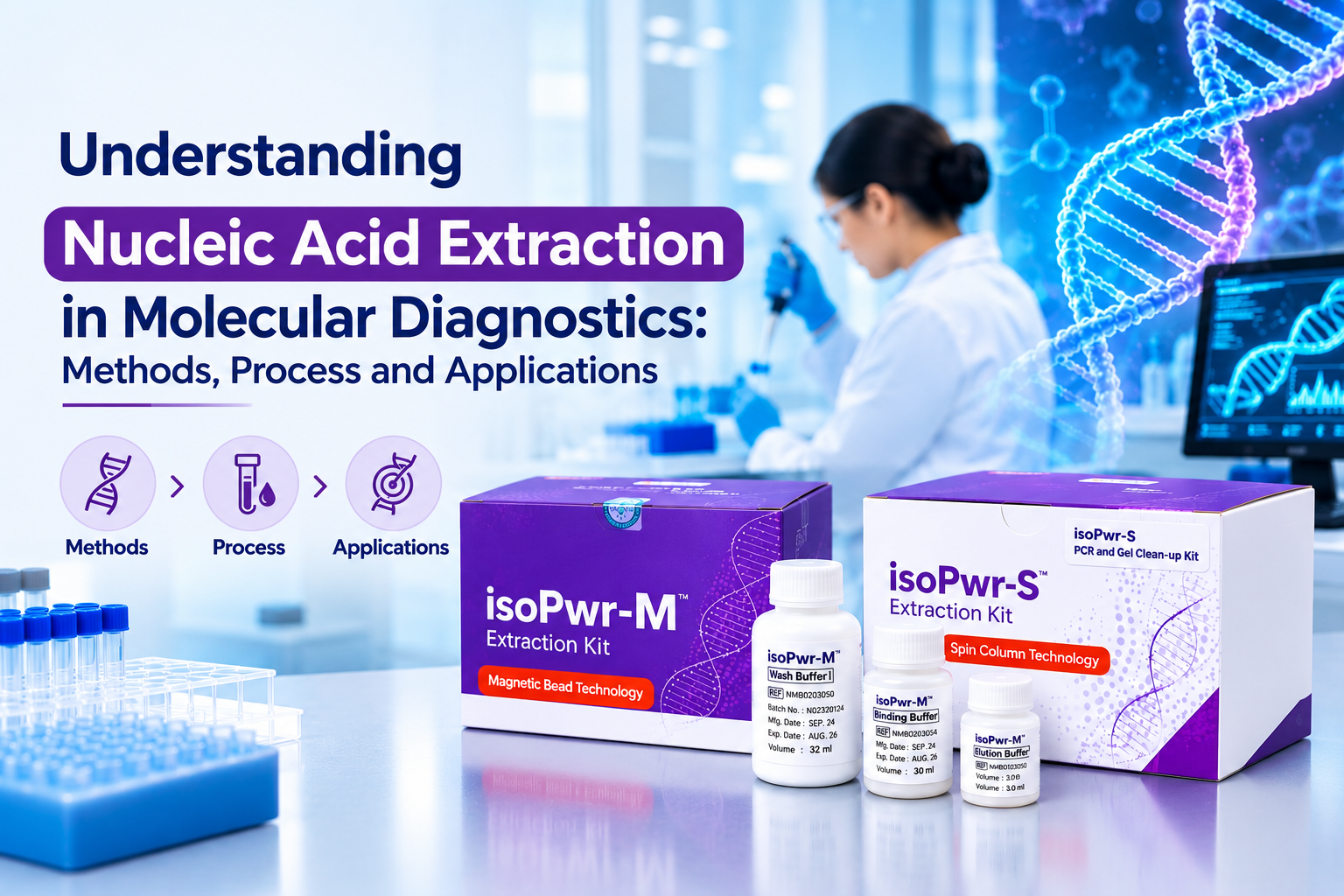
At NGIVD, the molecular diagnostics portfolio includes nucleic acid purification solutions designed to support different molecular biology workflows. The isoPwr-S series uses silica spin column technology for DNA and RNA purification, while the isoPwr-M series uses magnetic bead technology for nucleic acid extraction.
These solutions offer laboratories options based on their sample requirements, extraction preferences and downstream molecular applications. The broader NGIVD molecular diagnostics portfolio also includes MoleFeri™ Molecular Transport Medium, designed to support specimen transport and preservation of nucleic acid integrity, and RubAce™ Total Decontamination Solution for molecular laboratory surface and equipment decontamination. Together, these products address different stages of molecular laboratory workflows, from specimen handling and nucleic acid purification to contamination control.
To explore the available products and their specifications, visit the NGIVD Molecular Diagnostics range.
Conclusion
Nucleic acid extraction is much more than a preliminary laboratory procedure. It is a critical foundation of molecular diagnostics that helps make DNA and RNA available for accurate and meaningful downstream analysis. From sample lysis and nucleic acid binding to washing and elution, every stage contributes to the quality of the final extracted material.
Technologies such as silica spin column and magnetic bead extraction offer different advantages, allowing laboratories to select solutions that match their sample types, throughput and testing requirements. As molecular diagnostics continues to expand across infectious disease testing, genetic research and advanced molecular applications, the importance of reliable sample preparation will continue to grow.
Better molecular testing begins with better sample preparation. And better sample preparation begins with reliable nucleic acid extraction.
Explore NGIVD’s molecular diagnostics solutions and discover products designed to support modern molecular biology workflows.